How does the multibrand partnership between Renault Group and Targa Telematics create value for fleet customers?
Eric Guillon (Renault): “Hello Henning, very pleased to share this interview with you, which illustrates the partnership between Renault Group and Targa Telematics. Since 2021, our fleet customers have been able to benefit from native connectivity — meaning without any additional telematics box in the vehicle. This applies to the Renault range, which includes Renault, Dacia and Alpine vehicles. For customers, the added value is reduced logistical complexity in installing a telematics box, faster onboarding, and the possibility to activate all of this remotely. So, it is very easy for our customers.”
Henning Wiefelspuetz (Targa Telematics): “As Eric said, our partnership and integration with Renault Group enable services for multibrand fleets of our joint customers. We provide wide coverage of the different Renault Group brands and models, as well as other brands integrated into the Targa platform. Because of this, the data, data formats and some processes can differ between vehicles across brands. For example, fuel levels may be displayed as a percentage or in litres, or tyre pressure may appear as numerical values or warning lights, depending on the manufacturer. Based on this, Targa Telematics harmonises the data and processes across all brands, makes and models, so that the rental, leasing and corporate fleet customers can manage services consistently across their entire multibrand fleet.”
Renault Group provides high-frequency vehicle data. How does this level of data granularity translate into concrete operational advantages for fleet operators?
Henning Wiefelspuetz: “Lower-frequency data updates — such as every 5 minutes or every 24 hours — are sufficient for some use cases, like mileage verification. However, for more critical events, higher data frequencies are essential, particularly for rental customers with geofencing, crash management, theft prevention and some insurance use cases. At Targa Telematics, we leverage the 5‑second and 30‑second data streams available for rental passenger cars, rental commercial vehicles, Dacia vehicles, Alpine vehicles and other brands integrated into the Targa Telematics platform. This enables our joint fleet customers to gain greater visibility, respond more quickly and secure their multibrand assets.”
Eric Guillon: “Today, Renault’s offer is quite simple. We have three packs depending on customer needs. The first pack provides all the vehicle status information, on an event basis. Then we have two packs with different geolocation frequencies, which are useful for specific customer use cases. They can select according to their needs. For example, a delivery company may require a 30‑second or even a 5‑second frequency to manage their operations. This is the benefit of such an offer.”
“Our offer is flexible, with different data frequencies tailored to customers’ needs.”
How does connected vehicle data enable more proactive maintenance management for fleets?
Eric Guillon: “Connected maintenance is key for our customers. We are about to launch a new connected maintenance service which, in addition to the scheduled maintenance already in place, will offer proactive maintenance. This means that when there is a mechanical alert for the customer or the driver, we will support them in quickly scheduling an appointment within the Renault network to reduce vehicle downtime. The objective is clear: optimising the company’s activity and turnover. We will later introduce predictive maintenance to anticipate, for example, tyre replacement, further optimising fleet usage and business operations.”
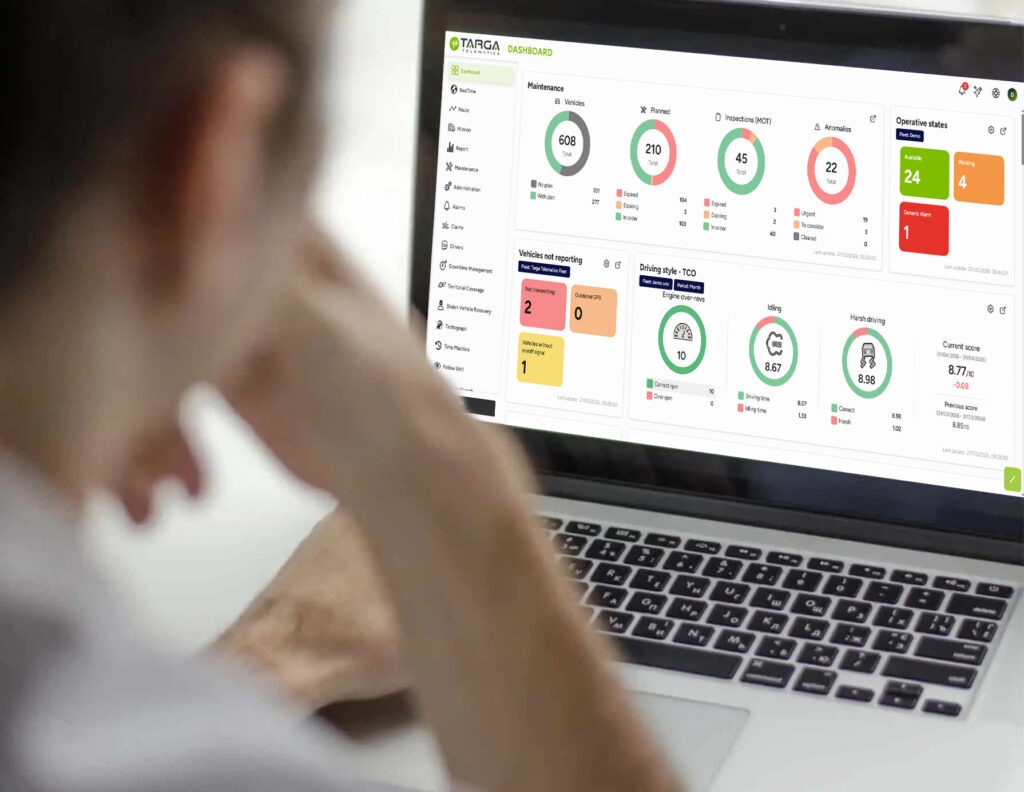
Henning Wiefelspuetz: “I fully agree with what Eric said. Our partnership with Renault Group already enables proactive maintenance today, and will continue to evolve with new offerings. For our joint Targa Telematics and Renault customers, reactive maintenance can result in costly downtime and complicate fleet optimisation. At Targa Telematics, we convert data from Renault Group vehicles — and other brands integrated into our platform — using diagnostics data, dashboard warning lights and other available information into automated workflows and alerts for our customers. As a result, they can schedule repairs proactively, optimise their planning, keep vehicles ready for operation, reduce downtime and consequently lower the total cost of use.”