




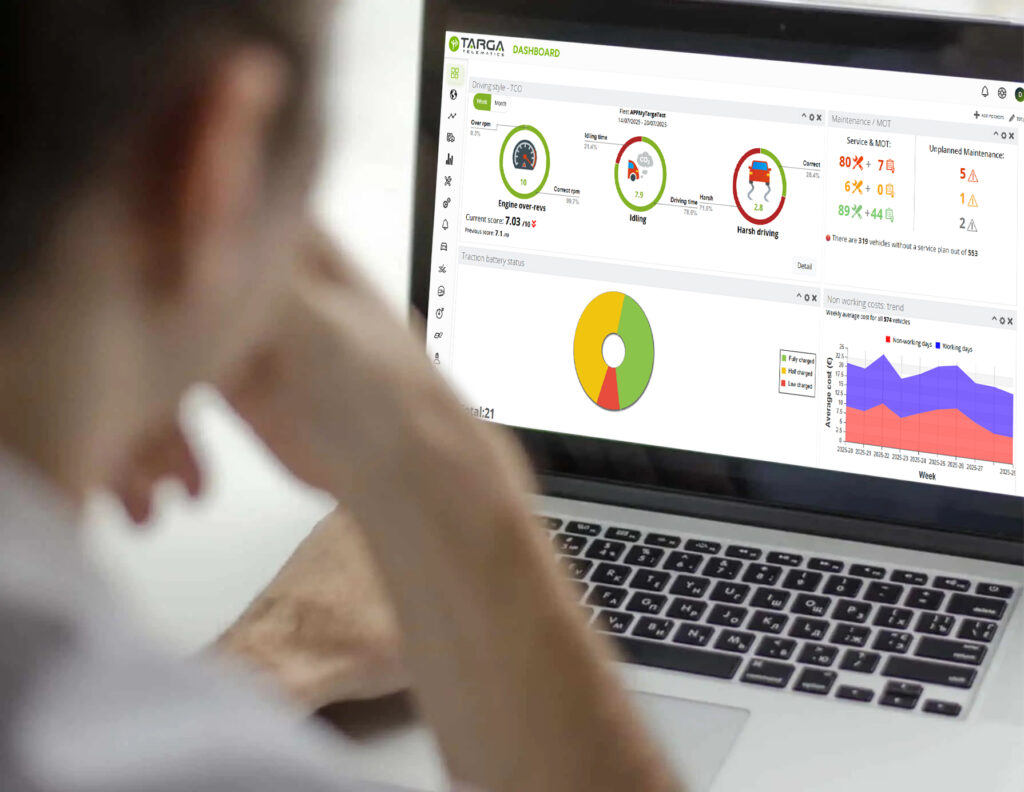
Fleet vehicle maintenance is no longer just a technical matter. Today, it is one of the key factors affecting costs, operational continuity and service quality. In 2024, according to Aniasa estimates, long-term rental companies spent €1.3 billion on fleet maintenance, carrying out around 3 million service interventions over the year. On average, each vehicle entered a workshop 2.2 times, with an average cost per intervention of around €433.
These figures help explain why maintenance has become a key area for innovation.
Why vehicle downtime is the real challenge in fleet maintenance
Every day a vehicle is off the road has a direct impact on productivity, indirect costs and the quality of service delivered to drivers and customers. Without a structured management approach, downtime increases significantly. Considering only major interventions, average downtime can reach 15–18 days, falling to 7.5–8 days when shorter activities are included. When additional factors come into play – such as bodywork repairs or insurance procedures – downtime can increase by up to 50%, in some cases exceeding 25 days on average.
It is clear that maintenance can no longer be managed reactively. What is needed is a model capable of anticipating issues, coordinating activities and intervening before problems become critical.
Data, not schedules: how maintenance is changing
In recent years, fleet maintenance has undergone a profound transformation. Fixed schedules and reactive interventions are giving way to a data-driven approach, based on the continuous analysis of information generated by vehicles.
Actual mileage, real usage, anomaly alerts, OEM diagnostic data and information coming from third-party systems are becoming the foundation for faster and more accurate decision-making. This is the context in which Targa Telematics’ approach takes shape, with a platform designed to collect, normalise and enhance heterogeneous data sources.
Maintenance Excellence: an open and modular software ecosystem
Maintenance Excellence is not a single application, but an ecosystem of independent software modules, designed to operate either on their own or in combination, and above all to integrate seamlessly with third-party solutions already deployed within the fleet.
This means that Targa Telematics’ modules can work:
- alongside existing telematics systems,
- with OEM data streams activated on demand,
- with external platforms dedicated to diagnostics or maintenance management.
The result is a single, unified view of the vehicle and its maintenance process, fully integrated with existing systems.
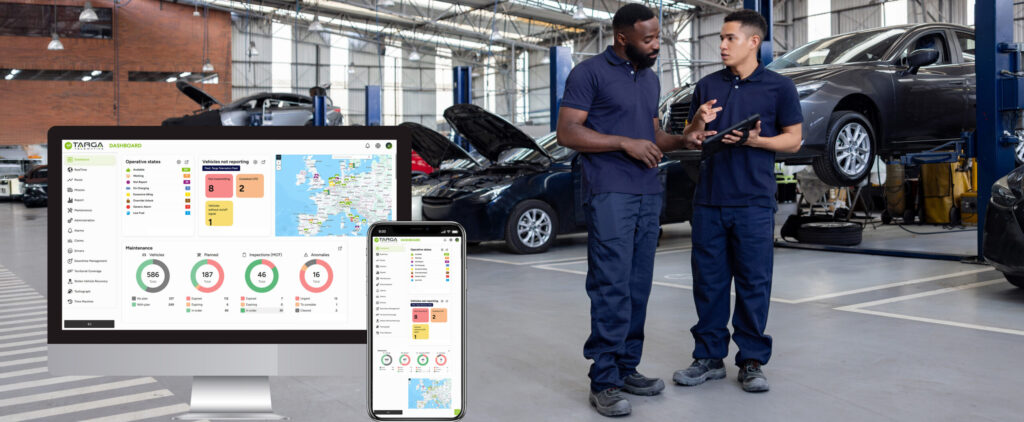
The modules that make maintenance more efficient
Within Maintenance Excellence, each module plays a specific role.
Data collection and normalisation modules aggregate information from Targa devices, OEM systems and third-party solutions, making data consistent and comparable.
Tracking and usage analysis modules enable fleets to move beyond maintenance based on theoretical schedules, introducing a logic driven by the vehicle’s actual usage.
Device Management modules ensure data continuity and quality by monitoring device status and data flows, even when information originates from external ecosystems.
Finally, maintenance analytics and dashboard modules turn data into actionable insights: downtime, recurring causes, intervention frequency and performance indicators become measurable and manageable.
Each module is autonomous, but value grows exponentially when they are connected and orchestrated together.
Agentic AI: the intelligence that orchestrates data
This is where Agentic AI – the most advanced evolution of artificial intelligence applied to fleet management – comes into play. It is not just about predictive algorithms, but about intelligent agents capable of observing the context, making decisions and triggering operational actions.
In the maintenance domain, Agentic AI can:
- correlate data from multiple sources,
- detect early signs of wear before they turn into failures,
- suggest or automatically activate optimal maintenance windows,
- initiate operational workflows, such as authorisations or intervention planning.
In practice, AI does not merely describe what is happening: it helps decide what to do and when to do it.
Less complexity, more control
When integrated into operational processes, Agentic AI also helps reduce the day-to-day complexity of maintenance management. Alerts are automatically filtered and classified, distinguishing critical issues from non-blocking ones. Human resources can therefore focus on high-value decisions, while AI handles repetitive tasks.
Maintenance as a competitive advantage
The combination of independent software modules, multi-source data integration and Agentic AI transforms maintenance from a cost centre into a competitive advantage. Fewer downtime days, greater vehicle availability, a better experience for drivers and fleet managers, and improved planning capabilities.
In a market where every day of downtime counts, the real difference is no longer made by the workshop alone, but by the ability to govern maintenance through data and artificial intelligence.
