How does the multibrand partnership between Renault Group and Targa Telematics create value for fleet customers?
Eric Guillon (Renault): “Hello Henning, very pleased to share with you this interview, which illustrates the partnership between the Renault Group and Targa Telematics. Our fleet customers can benefit from now and since 2021, from native connectivity. It means without any additional telematic box in the vehicle. This works for Renault range, which means Renault vehicle, but also Dacia and Alpine. For the customer the added value is less logistic complexity to install the telematic box and faster onboarding, all of this activates the vehicles remotely the vehicles. So very easy for our customers.”
Henning Wiefelspuetz (Targa Telematics): “So as Eric said, our Renault Group and Target Telematics partnership, and our integration, enables services for multibrand fleet of our joint customers. So having a wide coverage of the different Renault Group brands and models and also other brands we’ve integrated on the Targa platform. Because of this, the data and the data formats and some of the processes can differ between vehicles across different brands. For example, the fuel levels can be in percentage or in liters, or tire pressure can be values or warning lights, depending on the vehicle manufacturer. Based on this, Targa Telematics harmonizes these data and harmonizes the processes across all the different brands, all different makes and models, so that at the end, our joint customers, the rental leasing corporate fleet customers can manage the services across all the different makes and models in their fleet for a multi-brand solution.”
Renault Group provides high-frequency vehicle data. How does this level of data granularity translate into concrete operational advantages for fleet operators?
Henning Wiefelspuetz: “So lower frequency data updates, like every 5 minutes or every 24 hours, for some use cases are fine, like verification of mileage for some customers, but for some critical events, higher data frequencies are important and actually needed for like rental customers, with geofences, crash management, theft prevention, and some insurance use cases. So at Targa Telematics we do leverage the 5 seconds and 30 seconds data streams, which are available for rental passengers cars, also for rental like commercial vehicles for Dacia vehicles, Alpine vehicles, and other brands we have integrated into the Targa Telematics platform, so that at the end, based on this, our joint customers, the fleet managers, fleet operators, are able to benefit from having more visibility, are able to react faster, and to secure their multi-brand assets in their fleet.”
Eric Guillon: “Today Renault’s offer is quite simple. We have three packs, depending on customer needs. The first pack is all the information on the status of the car. It’s on event. But then we have two packs with two different frequencies of geolocation, which is useful for some use cases of the customers. So, they can select according to their needs. For example, a company doing deliveries will need 30 seconds or maybe 5 seconds frequency to manage their activity. And this is the benefit of an offer like this.”
“Our offer is flexible, with different data frequencies tailored to customer needs.”
How does connected vehicle data enable more proactive maintenance management for fleets?
Eric Guillon: “Connected maintenance is key for our customers. And about this topic we are about to launch a new service of connected maintenance, because in addition to the plan maintenance that we already have, we will offer proactive maintenance, which means when there is a mechanic alert, for the customer or to the driver, we will help them to be able to schedule quickly an appointment in the Renault network in order to reduce the downtime of the car. And the objective is clear, to optimize the activity of the company and the turnover. We will have later predictive maintenance to prevent, for example, tire change, and optimize again the use of the fleet and the activity of the company.”
Henning Wiefelspuetz: “I fully agree with what Eric said that our partnership with Renault Group already enables today maintenance also in terms of proactive maintenance and will further develop in the future based on the new offerings. So, for our joint Targa Telematics fleet customers and Renault joint customers, reactive maintenance can lead to costly downtime and makes optimizing these fleets more difficult.
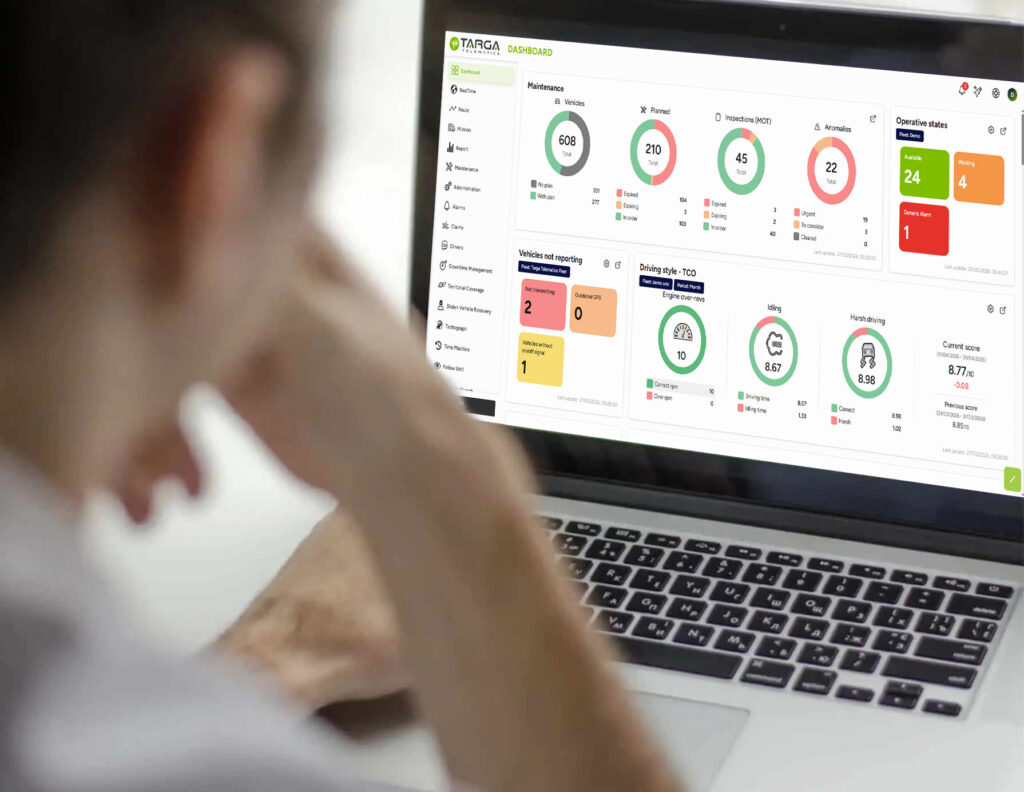
So, on Targa Telematics side, we do convert the data from Renault Group vehicles and the other brands we’ve integrated using diagnostics data and dashboard warning lights, other information which is made available into automated workflows and alerts for our customers. So, as a result, our customers can schedule the repair proactively, they can optimize all their scheduling, they can keep their vehicles ready for operations, reduce downtime, and, because of this, reduce the total cost of usage.”