




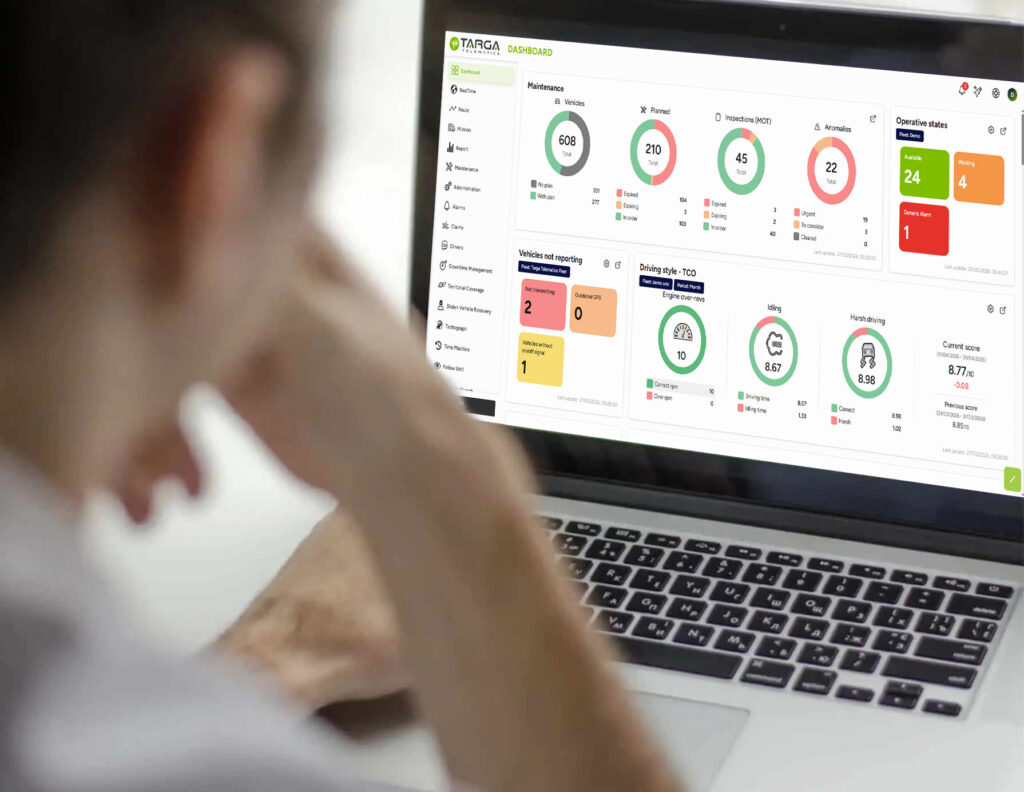

The rapid growth of connected vehicles has led to an exponential increase in available vehicle data across the mobility sector. However, the real value of this information depends on the ability to transform it into timely and effective operational decisions.
In this context, the Targa Platform, an Industry Cloud Platform, plays a central role leveraging over 15 years of Data Capital. As a vehicle data platform and smart mobility platform, it enables mobility operators to collect, structure, and analyze heterogeneous data to support both the digitalization of operational processes and the development of new business strategies.
This article explores how the platform works, from raw data to actionable outcomes, and the technologies that enable these capabilities.
- How Targa Platform works: from data to action
- The technologies behind Targa Platform
How Targa Platform works: from data to action
Everything starts with data, but not with a single isolated input. In the mobility ecosystem, information comes from multiple sources and describes different aspects of the same vehicle, its usage, and its operational context. Individually, these data points have limited value. Only when they are combined and analyzed over time do they enable a real understanding of events and support effective decision-making.
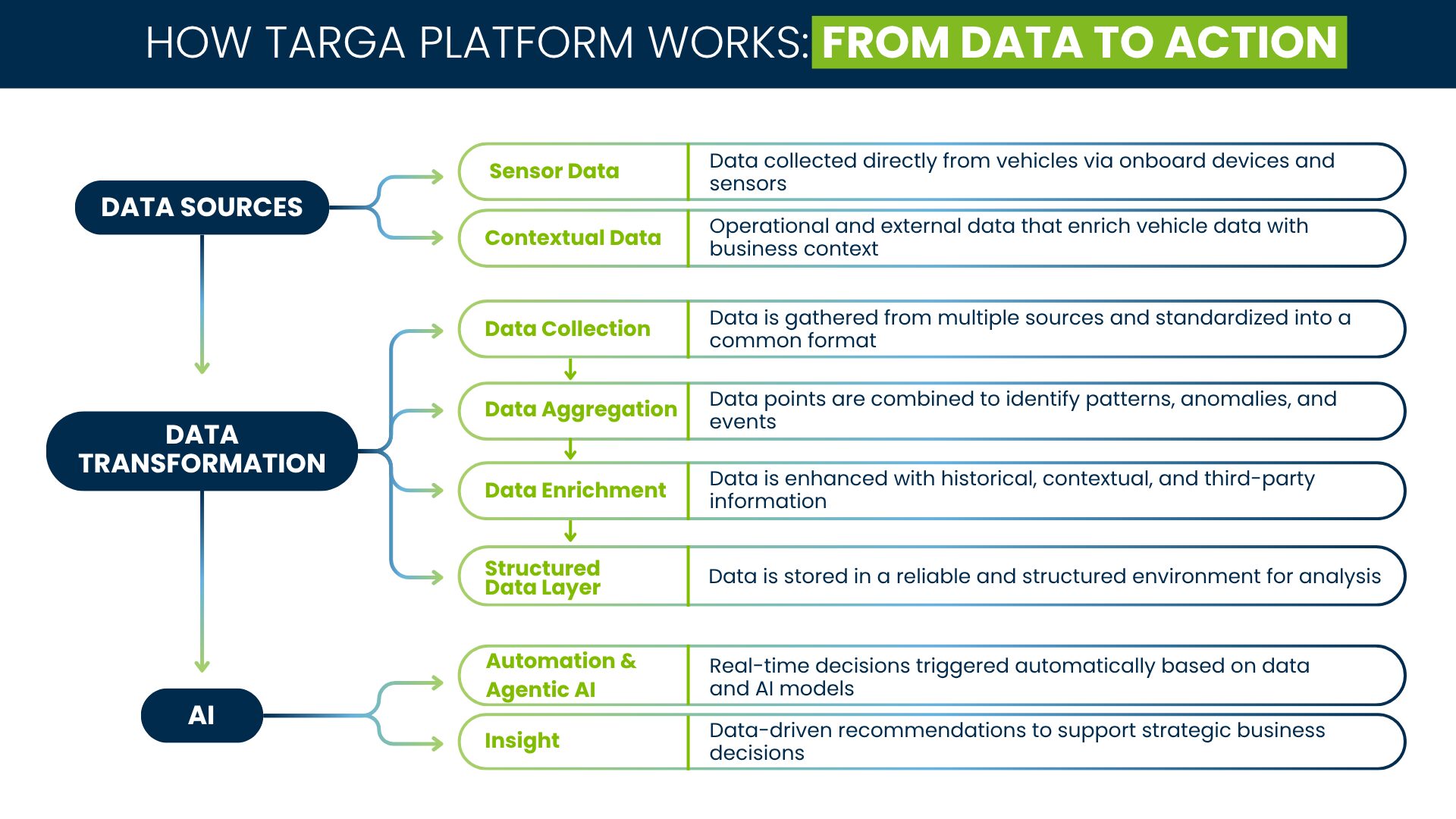
Where does the data come from? Targa Platform collects information from multiple sources that can be grouped into two main categories: data generated directly by vehicles and data that enriches the operational context based on the business segment.
Sensor data, collected through connected devices installed in vehicles:
- Aftermarket boxes and OEM devices, functioning as car data loggers or vehicle data recorders, capturing parameters from electronic control units via OBD and CAN-BUS.
- Smart dashcams, used to detect critical events and collect data for driving behavior analysis.
- Smartphone as a sensor, acting as a car event data collector, tracking vehicle usage via mobile devices, particularly relevant for insurance and driving behavior applications.
- LTR (Long-Term Rental): information from vehicle delivery centers, workshops, and service networks.
- STR (Short-Term Rental): data related to rental stations, turnaround facilities, and vehicle logistics.
- Fleet: information about company locations, delivery destinations, operational hubs, and usage patterns.
- Insurance: weather conditions (e.g., hail alerts), contractual data for risk analysis, historical usage patterns, and indicators of anomalous usage for fraud prevention.
These sources also contribute to improving AI models developed by Targa Telematics. As a result, connected vehicle data becomes a structured information asset, ready to be transformed into insights and operational actions.

How does data become actionable? Data becomes truly valuable when it moves beyond simple information and starts driving decisions and actions. This transformation requires a structured process that turns raw data into reliable, contextualized, and usable insights.
Within Targa Platform, data is first collected from all available sources and harmonized, overcoming differences in format, frequency, and origin. It is then aggregated to identify patterns, anomalies, and relevant events. At this stage, data is enriched with operational context, historical records, and third-party inputs, enabling a clear interpretation within business processes. Finally, it is stored as part of a structured and reliable data foundation used for advanced analytics, Artificial Intelligence, and automation.
This process enables the transition from simple monitoring to proactive and targeted intervention.
What can be done with connected vehicle data? Connected vehicle data enable two main AI-driven capabilities: Agentic AI and Insights. These represent different ways in which Artificial Intelligence supports decision-making, depending on frequency, trigger type, and level of human involvement.

Agentic AI: frequent, real-time decisions
Automation functionalities relate to operational decisions made at high frequency, often hundreds or thousands of times per day. They are triggered by Artificial Intelligence and can be handled entirely by the system including human supervision (Human in the Loop).
In this context, data is analyzed in real time using AI models, Machine Learning, or deterministic rules. The telematics platform evaluates each event based on historical data and behavioral patterns, automatically determining whether an action should be triggered.
Concrete examples include:
- Theft Detection: continuous monitoring of vehicles to identify anomalies and activate recovery processes.
- Maintenance and downtime management: identifying the need for intervention, automatically scheduling appointments between drivers and workshops, and verifying execution.
- Vehicle Delivery Monitoring: tracking the delivery process from carmaker to driver and resolving potential issues.
- Roadside Assistance: detecting breakdowns, assessing intervention needs, and dispatching assistance.
In these cases, Agentic AI enables large-scale decision-making, reducing response times, manual errors, and operational workload.
Insights: strategic and periodic decisions
Alongside automation, there are insight-driven functionalities, typically triggered on a periodic basis (monthly or quarterly) and linked to less frequent but high-impact business decisions.
In this case, the system does not act autonomously but provides analysis, highlights patterns, and recommends actions through interactive dashboards. These capabilities fall under Prescriptive Analytics or Domain Intelligence.
Examples include:
- Fleet Saturation: analyzing vehicle utilization to optimize fleet sizing across different locations.
- Workshop Network Management: monitoring geographic coverage, identifying under- or over-capacity areas, and recommending new partnerships.
- Driving Coaching: analyzing driver behavior to identify safe or risky patterns and suggest targeted training actions.
In this way, vehicle data analytics for car dealer networks, fleets, and insurers moves beyond static reporting and becomes an active driver of operations, automating repetitive tasks while supporting strategic decisions with data-driven recommendations.
The technologies behind Targa Platform
1. Artificial Intelligence
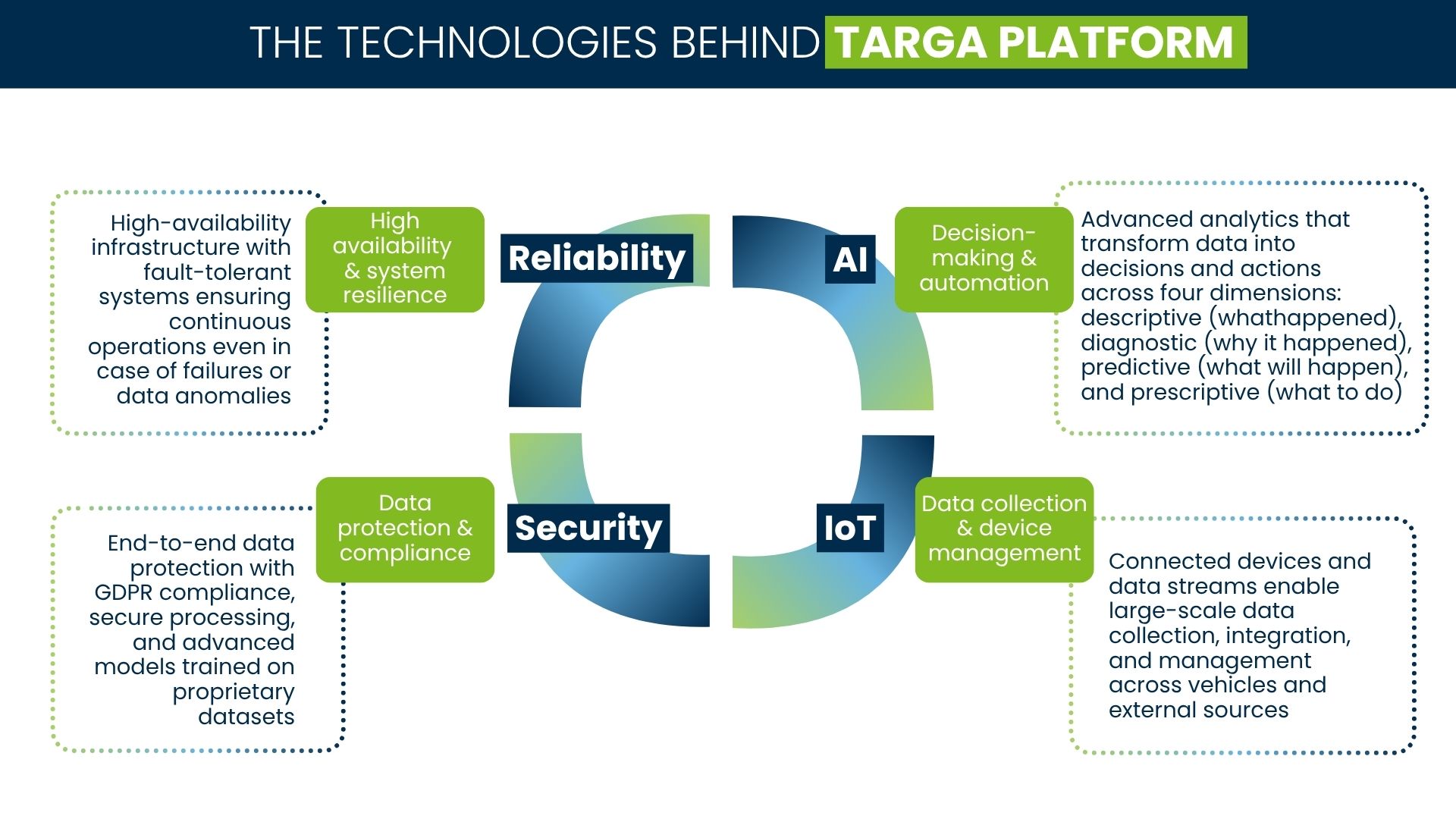
Artificial Intelligence is a core component of Targa Platform and is applied across four analytical dimensions to support decisions and processes in mobility:
- Describing what happens
AI reconstructs events and processes, helping to understand what has happened. For example, analyzing an accident or driving behavior. - Understanding the causes
The system explains why an event occurred, identifying root causes such as driving style or technical issues. - Predicting what may happen
By analyzing patterns, AI forecast future events, enabling proactive actions such as theft prevention or predictive maintenance. - Recommending and executing the best actions
AI supports decision-making by suggesting actions. For example, identifying which vehicles to electrify or where to install charging stations based on fleet usage.
2. IoT
Alongside AI, IoT represents the technological layer that enables data collection from vehicles and connected devices. As an automotive IoT platform, Targa Platform gathers heterogeneous and unstructured data from multiple sources describing the same phenomenon from different perspectives.
Operating at scale, the platform manages data from millions of connected vehicles and processes billions of data points daily. Data is collected through onboard devices, including vehicle data loggers, and OEM data streams.
IoT also includes device management capabilities such as data quality monitoring, remote diagnostics, connectivity management, and firmware updates. These ensure reliability and continuity of data flows.
While many providers specialize either in data collection or analytics, Targa Telematics combines both capabilities within a single mobility platform, transforming complex data into operational value.
3. Security
All data is collected, normalized, analyzed, and protected in compliance with GDPR regulations. Targa Platform integrates geographic, maintenance, consumption, and charging databases to generate reliable insights.
AI models are trained on contextual datasets using advanced techniques, including edge computing directly on the vehicle.
4. Reliability
The platform is designed to ensure high availability and operational continuity. Its infrastructure is based on fault-tolerant servers capable of maintaining operations even during partial failures or disruptions.
In the event of anomalies or unreliable data, the system can isolate affected services without impacting overall functionality. This approach ensures stability, resilience, and continuous operation, even in complex or critical scenarios.
The ability to transform connected vehicle data into operational actions is a key enabler of efficiency and innovation in the mobility sector. By combining IoT, Artificial Intelligence, its Data Capital and robust infrastructure, Targa Platform allows companies to manage data complexity and translate it into scalable, automated, and evidence-based decisions.
