




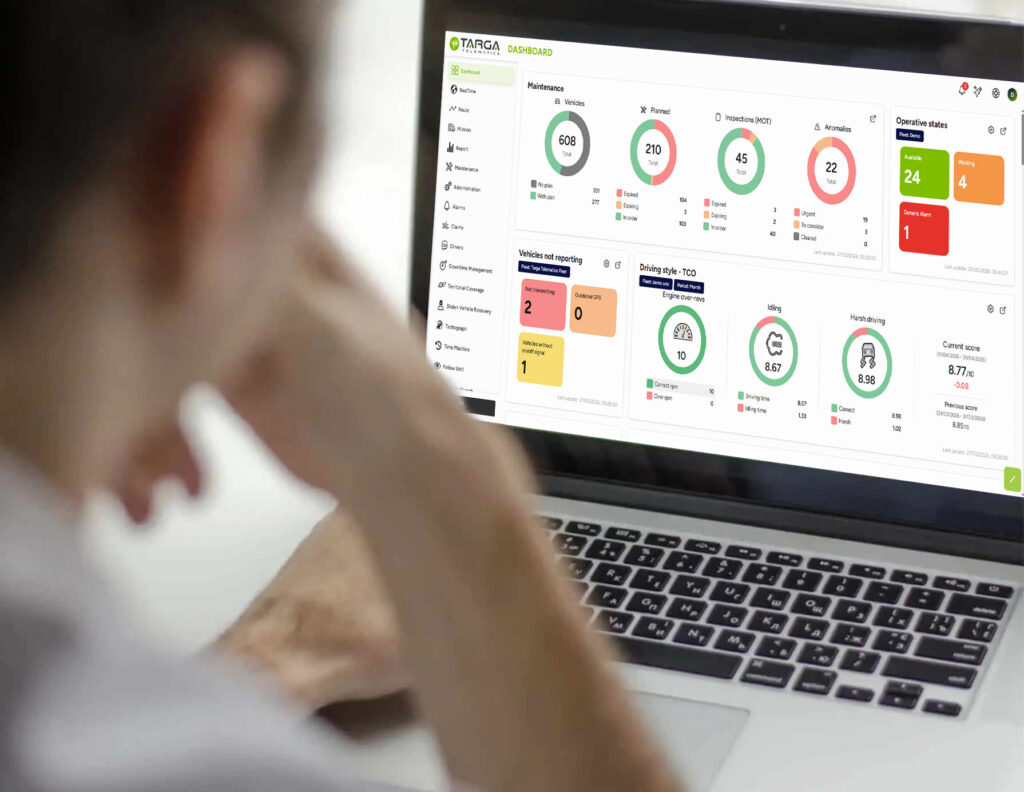
In May, Targa Telematics participated in the Global Fleet Summit 2026 in Cascais (Portugal) as a sponsor, actively contributing to the industry dialogue on the future of fleet management. The company took the stage to share its insights and hosted a roundtable session, engaging with key stakeholders on topics such as data-driven mobility, digital transformation, and sustainability.
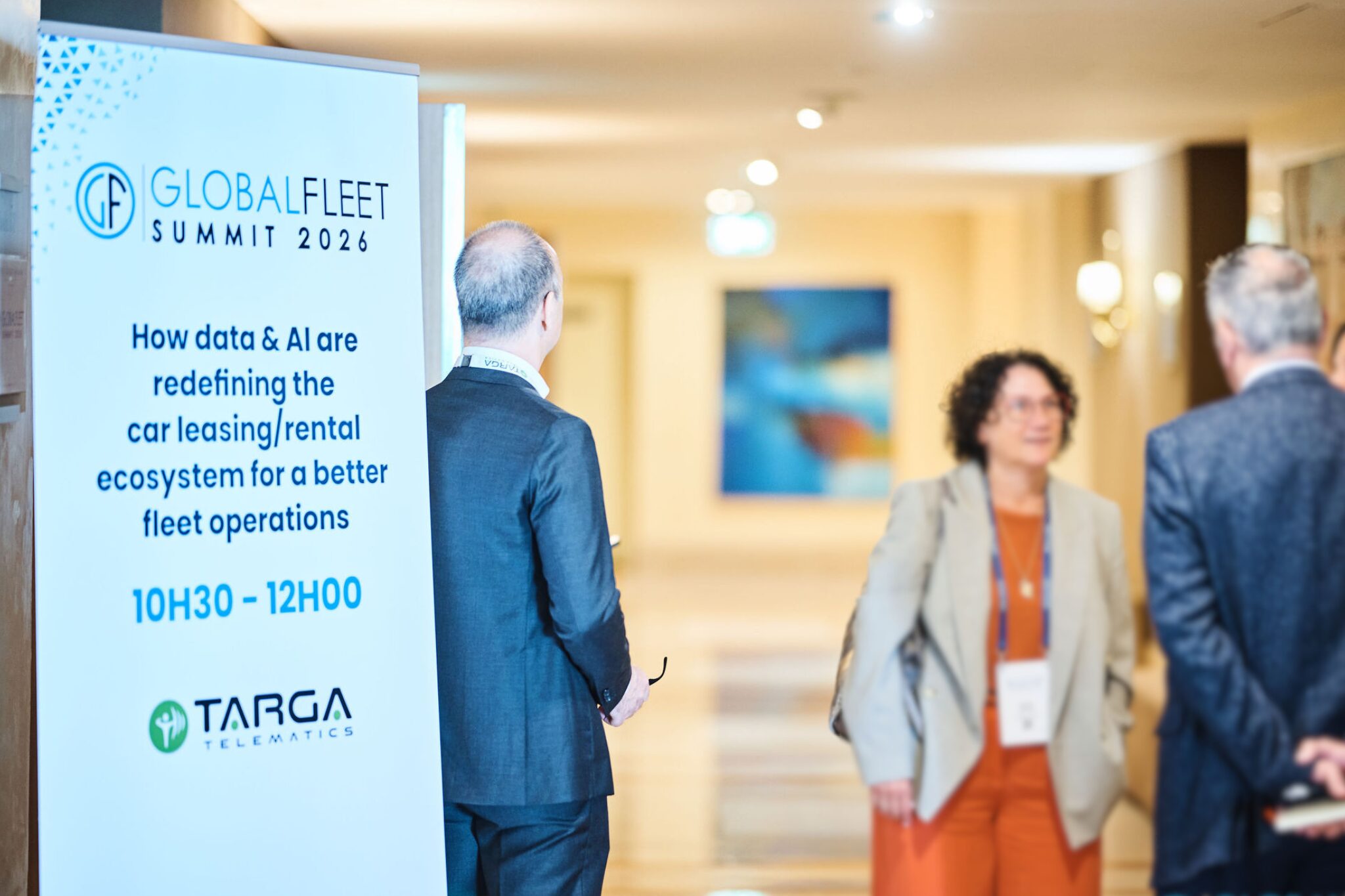
The roundtable session focused on one of the most transformative areas in the fleet industry: the role of AI and telematics in advancing the transition from data collection to true fleet intelligence.
The session brought together senior executives from leading leasing, rental, and car-sharing companies, fostering a high-level dialogue on the future of connected mobility, the digitalization of operations, and AI-driven fleet management.
AI and Telematics are reshaping Fleet Management
Targa Telematics’ roundtable was designed to deliver concrete, actionable insights that participants could immediately apply within their organizations. Through engaging discussions and peer-to-peer exchanges, executives explored:
- AI and Agentic AI driving operational digitalization and efficiency in mobility,
- Challenges in adopting telematics and data-driven strategies,
- Key use cases in predictive maintenance and theft prevention,
- Actual Business impact on cost savings, productivity, and customer value.
The discussion confirmed a clear industry direction: fleet operators increasingly see Artificial Intelligence as a current strategic operational tool rather than a future concept.
A live poll conducted during the workshop revealed that:
- 71% of fleet managers expect AI to become a real operational assistant within the next three to five years,
- 76% of respondants see predictive maintenance as the AI use case with the highest potential impact on fleet efficiency and cost optimization
These results highlight the growing demand for intelligent fleet management solutions capable of transforming raw vehicle data into actionable business insights.
Innovation is no longer optional
One of the emerging themes, during the roundtable’s discussions, was how rapidly the rental and leasing industry is evolving under the pressure of digital transformation and Artificial Intelligence adoption.
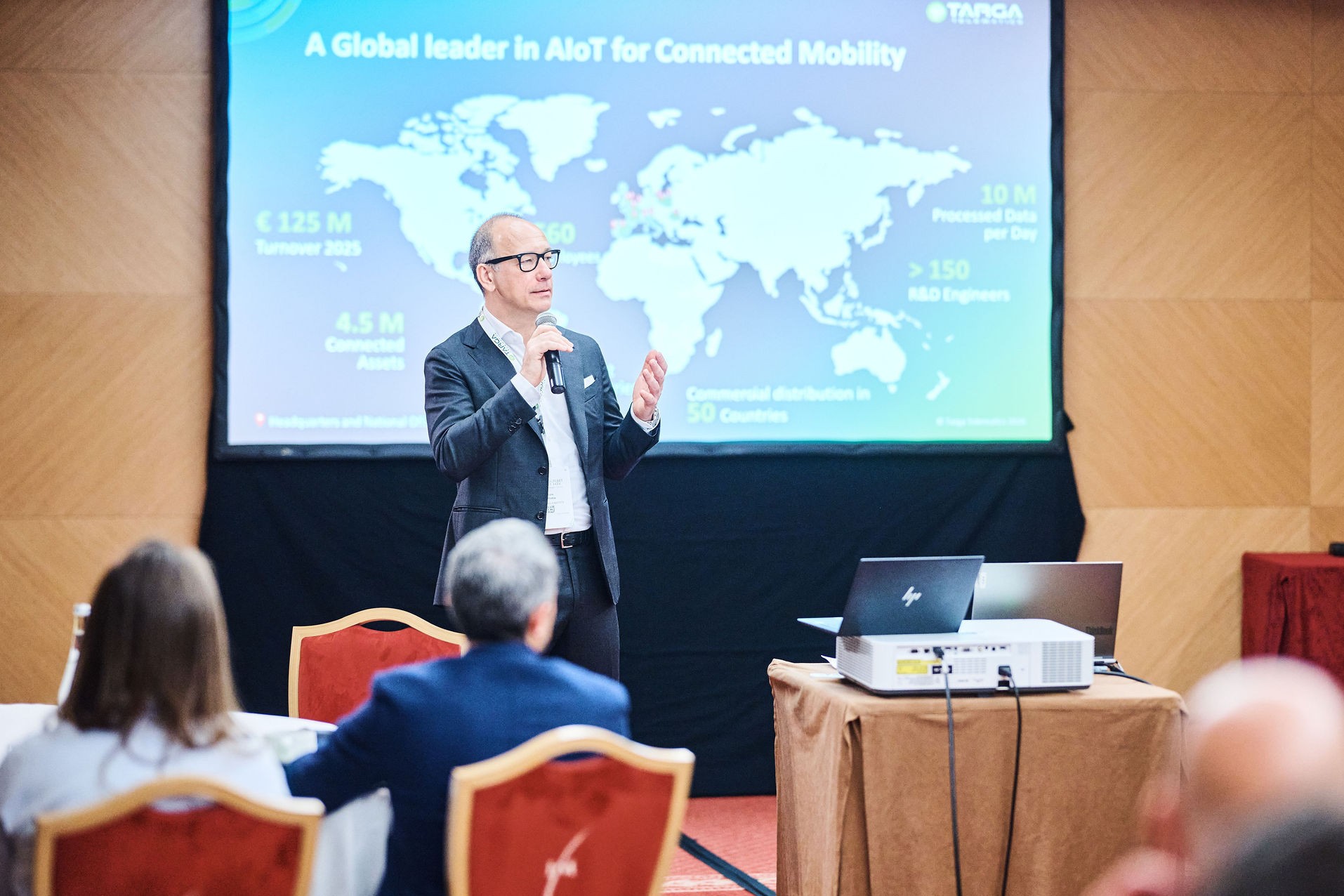
Nicola De Mattia, CEO of Targa Telematics, emphasized how the sector’s competitive dynamics fundamentally changed. Historically, companies could remain competitive regardless of their level of investment in innovation, whereas today AI and digitalization early adopters are building structural competitive advantages that are expected to grow over time.
According to De Mattia, organizations that fail to embrace this transformation risk not only losing market position, but also creating operational and technological gaps that will become increasingly difficult to close in the future.
The discussion emphasized that AI should not be seen as a standalone or a “magic”solution, but rather as a structured transformation requiring long-term vision, investment, specialized expertise, and the ability to redesign processes and organizational models.
Roundtable participants shared a clear view: innovation is no longer optional, but a strategic necessity for companies aiming to remain competitive in the future mobility ecosystem.
From Connected Vehicles to Intelligent Fleet Ecosystems
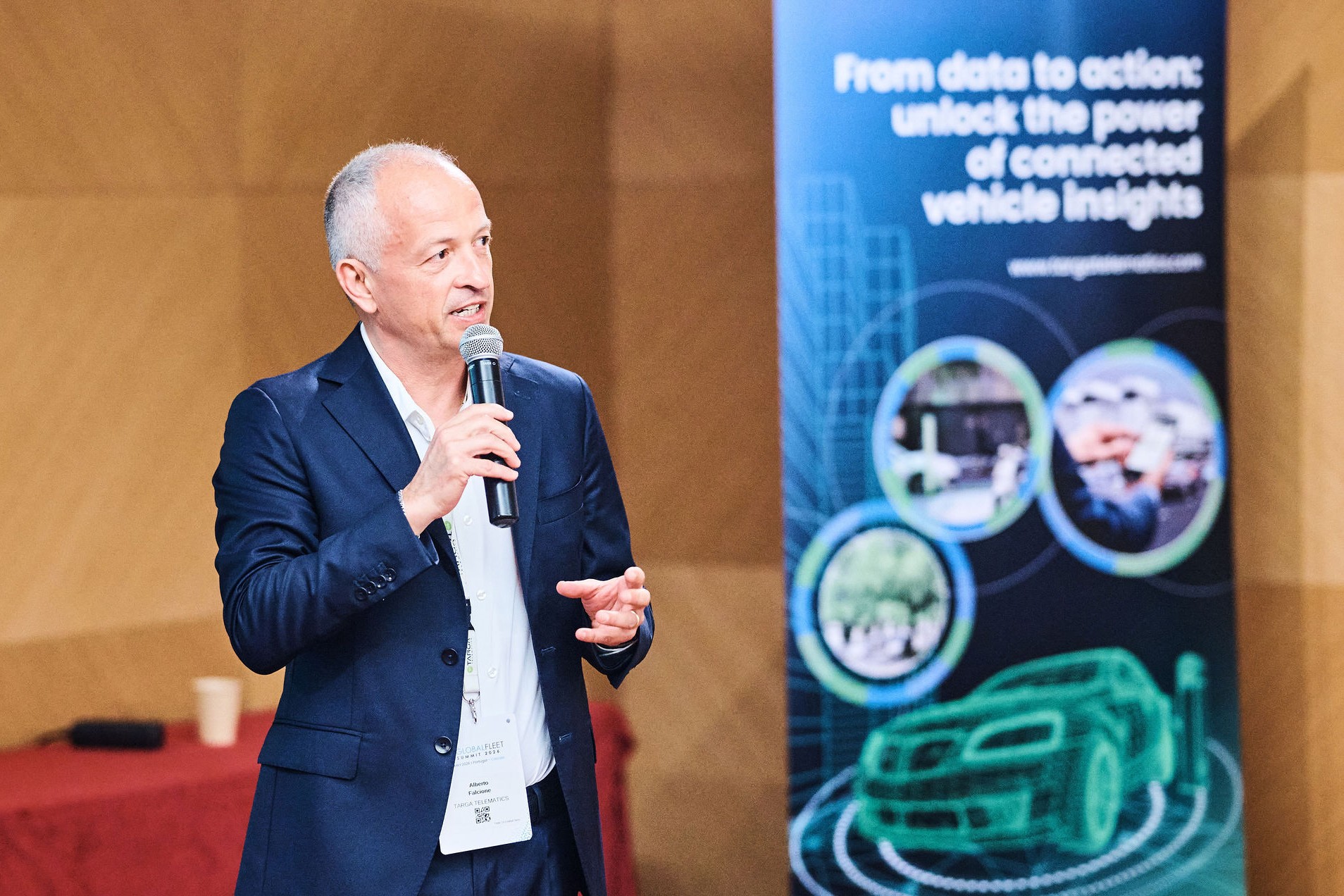
During the session, Alberto Falcione, VP Sales at Targa Telematics, outlined three key stages in fleet intelligence evolution:
- Connecting vehicles and assets through telematics,
- Transforming data into operational insights,
- Automating workflows through proprietary Agentic AI technologies.
This evolution enables fleet operators to shift from reactive management models to predictive and increasingly autonomous operations.
A key element highlighted during the discussion was the importance of domain-specific expertise in developing effective AI applications for mobility and fleet operations. Generic AI models alone are not sufficient to deliver meaningful business value. The real impact comes from models trained on specialized fleet management datasets, such as short-term rental, long-term leasing, car sharing, and airport operations.
By integrating AI capabilities into operational processes, companies can translate data into measurable business outcomes rather than theoretical insights alone.
According to Falcione, companies that successfully integrate AI into their operational processes will gain a significant competitive advantage in terms of efficiency, service quality, and scalability.
The real business impact of AI-Powered Fleet Intelligence
The executive discussion focused on innovation, and proven business results from telematics and AI-driven mobility platforms:
- Up to 30% lower maintenance costs,
- 13% decrease in fleet downtime,
- 30% fewer theft incidents vs. national averages
These results demonstrate how connected mobility technologies are becoming essential tools for rental, leasing, and corporate fleet operators seeking higher operational efficiency and improved customer value.
A collaborative vision for the Future of Mobility
Designed as an interactive peer-to-peer exchange, Targa Telematics’ roundtable enabled participants to openly discuss the challenges of adopting telematics, integrating data-driven strategies, and scaling AI applications across fleet operations.
The event also reinforced the importance of collaboration between technology providers, mobility operators, and ecosystem partners to accelerate digital transformation in the fleet industry.
