





- From application outputs to operational usability
- Concrete examples
- Key benefits for mobility companies
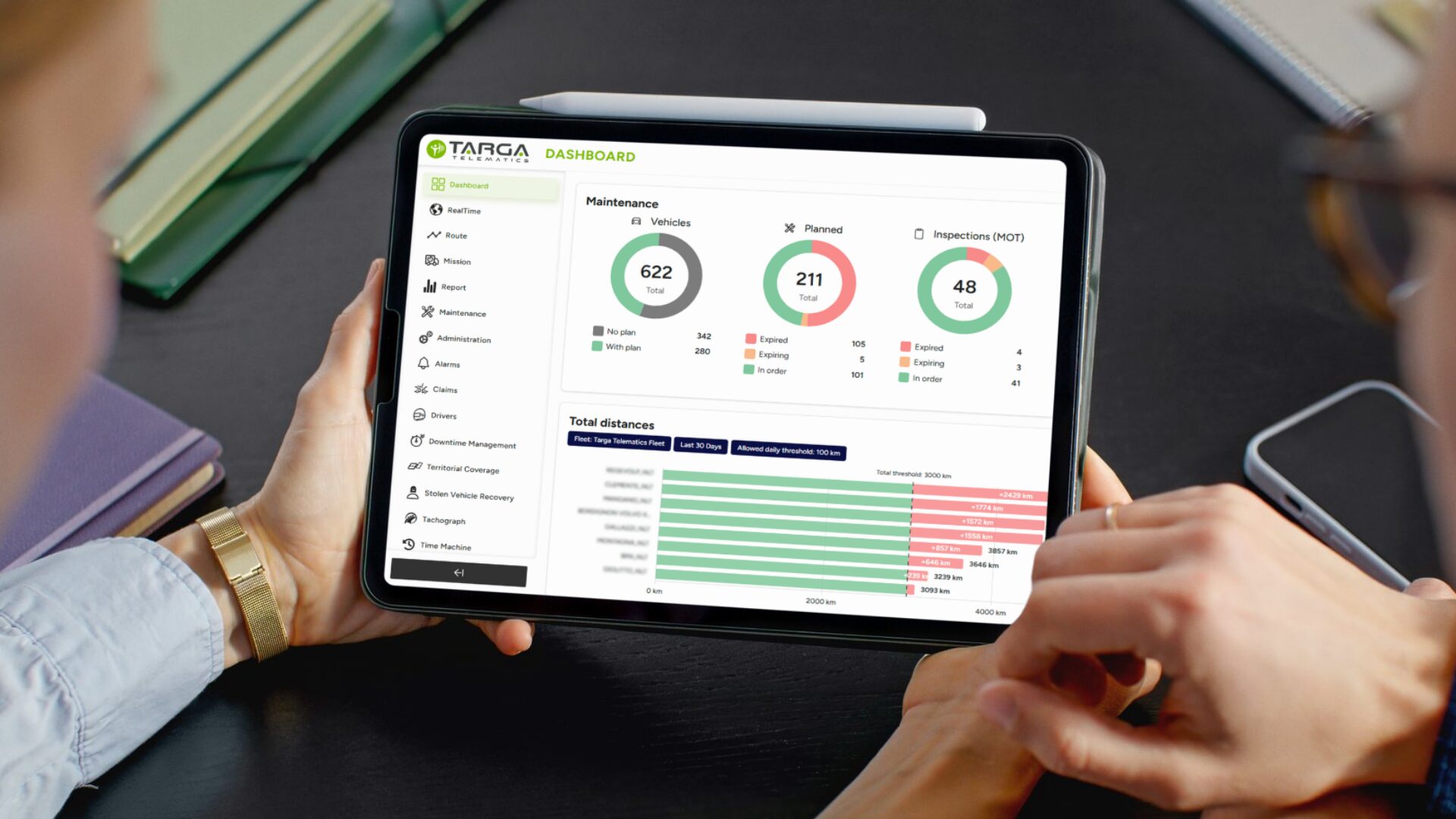
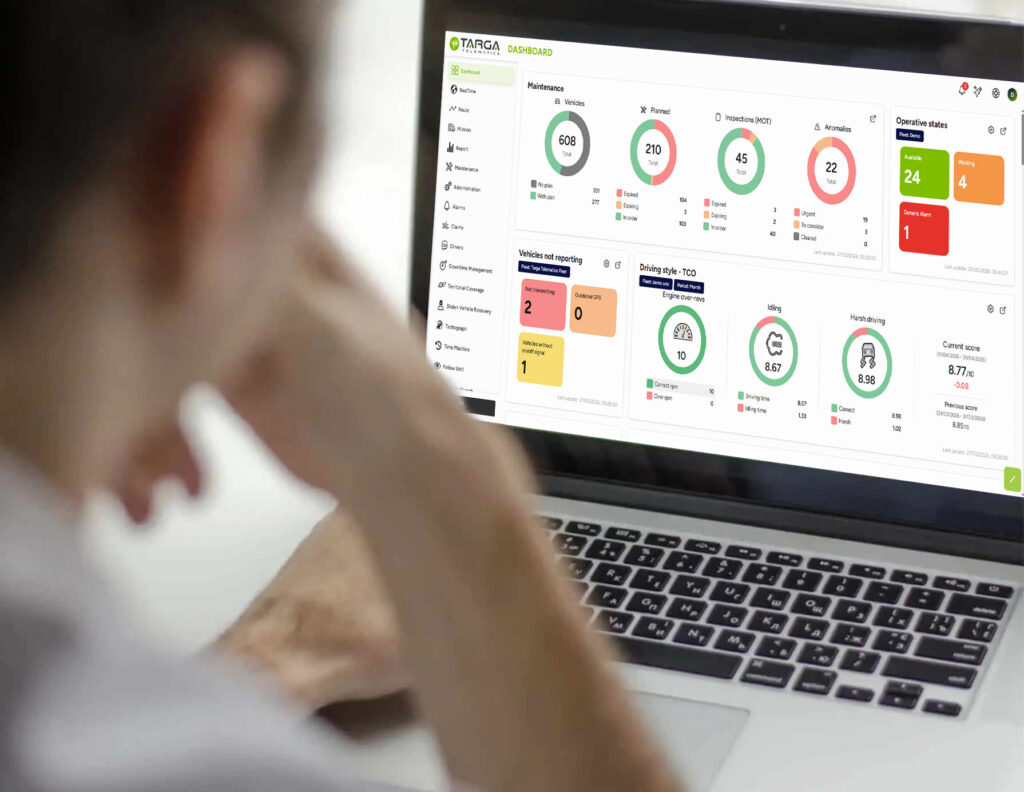
Connected mobility is increasingly driven by the ability to transform connected vehicle data into automation and actionable insights. In this context, platforms are not just collecting information from connected vehicles, rather, they enable mobility companies to integrate AI, automation, and connected vehicle technology into everyday processes. In this context, Targa Platform positions itself as an open mobility and automotive AIoT platform capable of turning vehicle data into measurable business value across fleet management, insurance, rental, and shared mobility operations.
Transforming Data into Operational Value
Targa Platform transforms data, integrating Artificial Intelligence , into actionable insights designed to support crucial mobility processes. These are not isolated technological features, but software modules that can be integrated into customers’ systems or complete operational solutions addressing areas such as theft prevention, reduced vehicle downtime, vehicle usage optimization, and support for new data-driven business models.
To be truly effective, solutions must be easily accessible and seamlessly harmonized with companies’ systems and workflows. This is why Targa Platform makes them available through multiple customer interfaces, based on the digital maturity and the specific requirements of each organization.
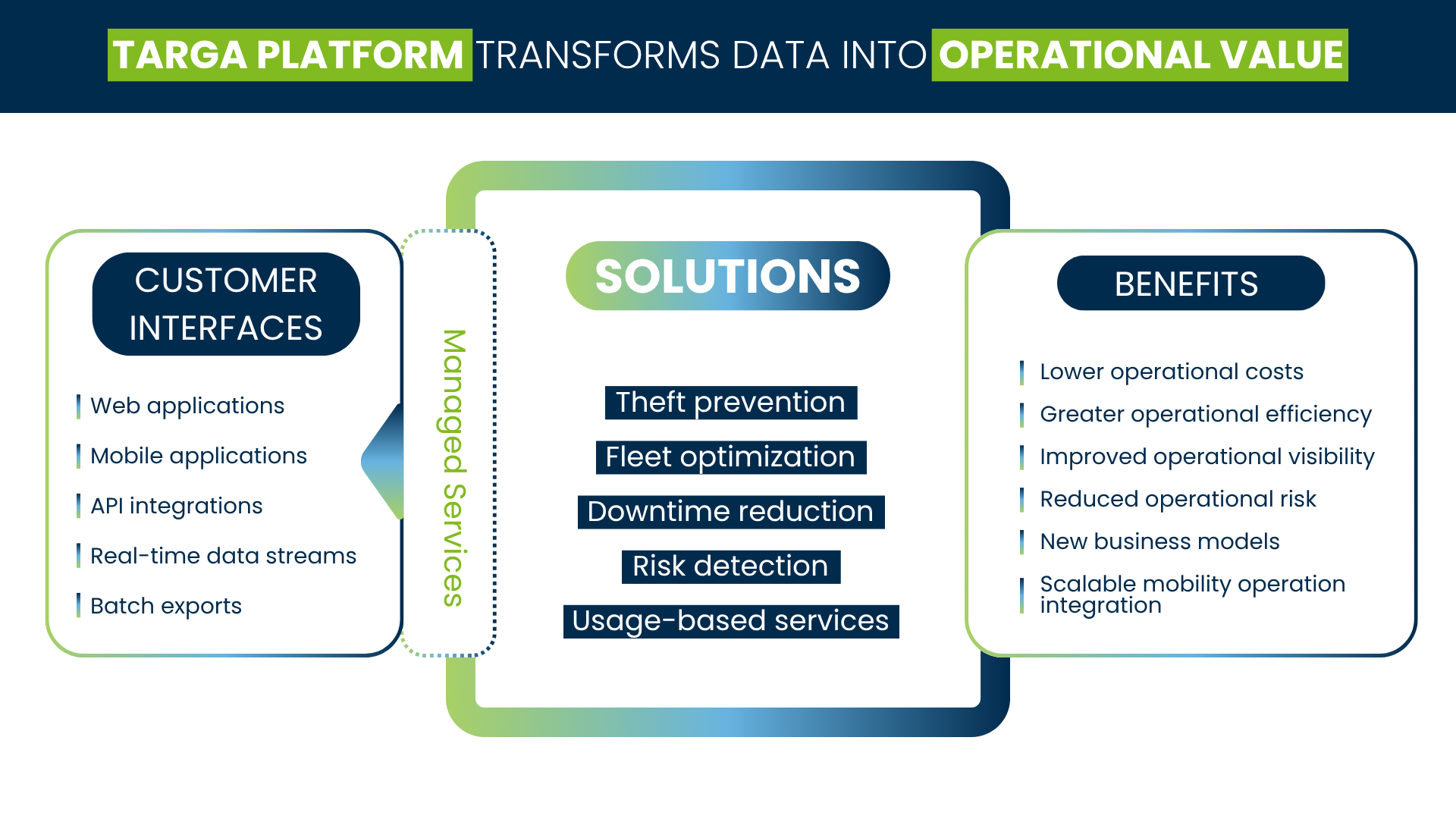
Solutions can be accessed through web and mobile applications used by operators to monitor and manage daily activities, or integrated directly into enterprise systems through APIs, real-time data streams, and batch exports. This approach allows companies to decide how to leverage the value generated by the platform, whether through ready-to-use interfaces or as part of existing digital ecosystems.
Targa Telematics’ technology not only generates insights but also delivers them in multiple operational formats that can be immediately used within decision-making and operational processes. The system is an integrated mobility and telematics platform designed on a modular “Lego bricks of mobility” architecture, which is a flexible suite of microservices that can be seamlessly combined with hardware components and integrated into clients’ existing systems. This approach directly addresses real-world customer challenges, where enterprise environments are rarely built from scratch but instead involve diverse hardware, multiple OEM data formats, and complex legacy integrations. Complementing this architecture, the company’s Control Rooms operate 24/7 across Europe, delivering proactive support by continuously monitoring fleet activity, managing security alerts, and coordinating emergency responses.
The integration of agentic AI has further enhanced service delivery, automating the filtering, correlation, and prioritization of thousands of alerts, allowing human operators to focus on critical incidents. This results in faster response times, reduced false alarms, and significantly improved security outcomes for customers. In addition to its technology platform, Targa Telematics provides fully integrated managed services, including installation, customer support, help desk, and control room operations. This reduces the operational burden on customers while ensuring consistent performance and service continuity.
Organizations can thus benefit from a smart mobility platform ensuring reliable deployment, faster implementation, and reduced operational overhead, further strengthening customer service experience.
Concrete examples

One significant example is Smart Vehicle Protector (SVP), an AI-driven solution designed to prevent theft and vehicle misappropriation in fleets. Using continuously updated behavioral models and virtual agents that constantly analyze usage patterns, the system cross-references contextual information to identify risky situations and proactively intervene, recognizing potential fraud attempts or vehicle theft before the event occurs.
The issue is particularly relevant in the rental and leasing sector, where embezzlement – situations in which a vehicle is not returned or is used in breach of contractual conditions – is rapidly increasing. According to the 25th ANIASA Report, 690 cases were recorded in Italy in 2025, compared to 389 in 2023, marking a 77,5% increase. The ratio of vehicle misappropriation incidents to average fleet size almost doubled, rising from 0.28% to 0.50%. Operational data from Targa Telematics confirms this trend. In 2025, the platform managed around 4,000 vehicle misappropriation cases within more than 10,000 thefts, achieving recovery rates of up to 90% thanks to seven operational control centers active across Europe 24/7.
In this context, Smart Vehicle Protector reduces risky behaviors and theft events by more than 30%, analyzing signals such as contract limit violations, anomalous movements, tampering attempts, and usage patterns inconsistent with the vehicle’s historical behavior. The Control Room receives qualified alerts and can intervene promptly, minimizing the economic consequences of theft.
The financial benefits are tangible. For example, it is estimated that in a mid-sized fleet, vehicle misappropriation can have an impact exceeding €1 million. *
By leveraging connected vehicle technology, predictive analytics, and a vehicle data platform capable of processing real-time information from connected vehicles, companies can significantly reduce exposure to these risks.
A second example is the saturation analysis, an AI-based functionality designed to optimize corporate car sharing operations. By analyzing actual vehicle usage, the system unlocks more efficient allocation of vehicles based on users’ needs, reducing waste and unnecessary investments. In a fleet of more than 1,000 vehicles, the adoption of saturation analysis reduced fleet size by 16%, generating annual savings of approximately €600,000 in rental costs. In smaller fleets of around 300 vehicles, savings reached €250,000.
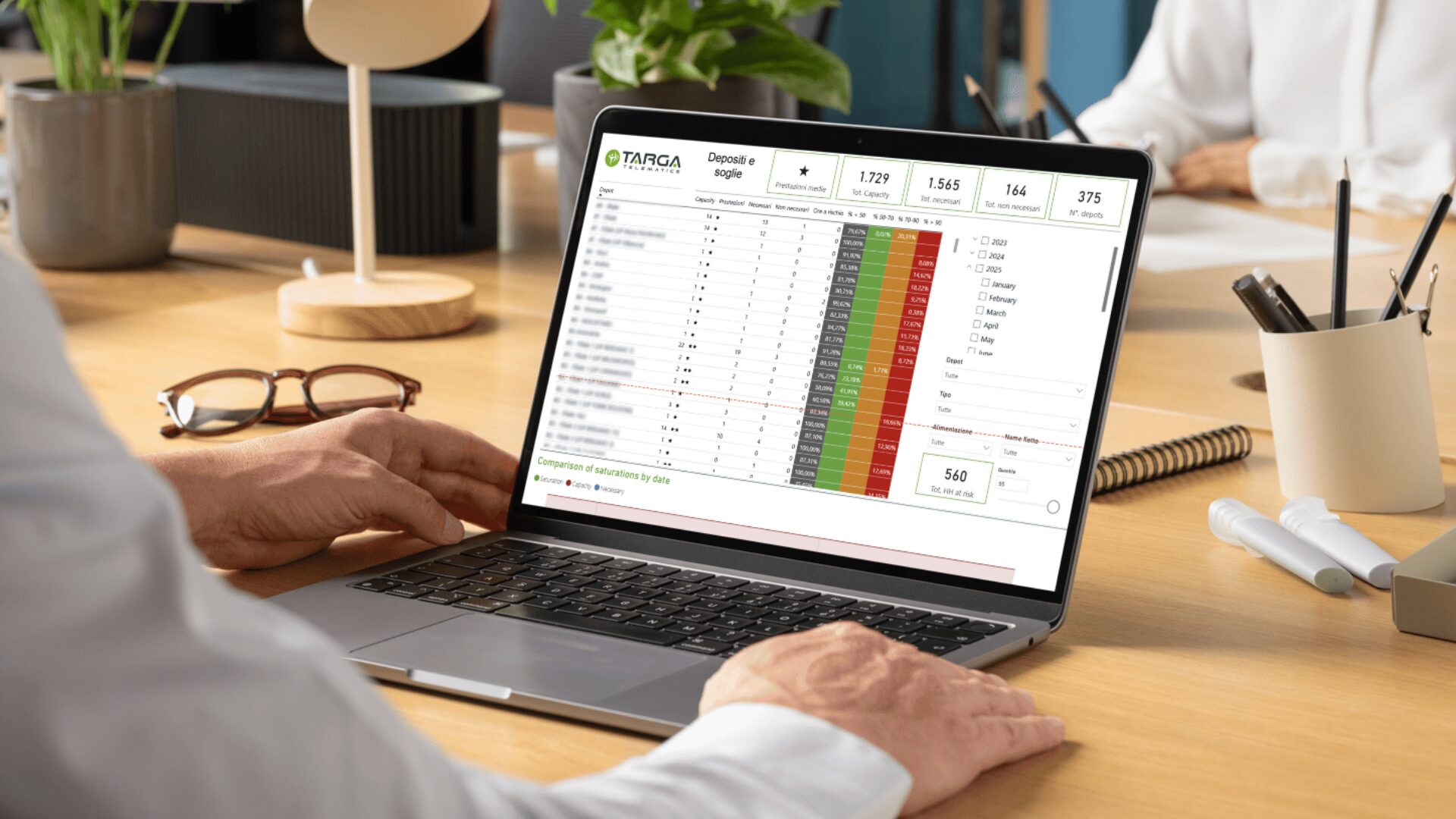
These examples demonstrate how the combination of Artificial Intelligence, Managed Services, and connected vehicle data can turn platform outputs into measurable business results, leading to improved risk prevention and remarkable cost savings. These cases also highlight the strategic role of an automotive IoT platform in enabling scalable and data-driven mobility operations.
Key benefits for mobility companies
Adopting an Industry Cloud Platform means moving beyond a fragmented approach to digitalization and transforming data, technology, and processes into measurable value. In the mobility sector, this translates into concrete benefits across three main dimensions: growth, profitability, and efficiency.
New products and business models
The availability of vehicle data and behavioral insights enables companies to develop usage-based products that go beyond static and standardized models. This is the case for rental and usage-based insurance solutions, where pricing is defined using connected vehicle data collected from the vehicle and driver behavior. In this scenario, the platform allows organizations to design more flexible and personalized services, aligning value with actual usage and risk profiles.
By integrating connected vehicle technology with AI-driven analytics, Targa Platform supports the development of new mobility services and innovative operating models. This helps companies monetize vehicle data and create more dynamic service ecosystems.
Optimization operational processes
Many critical mobility processes impact costs and operational efficiency. Activities such as stolen vehicle recovery, insurance fraud management, reduced vehicle downtime, and fleet inventory visibility can be optimized through real-time insights and data-driven processes.
This approach allows companies to improve profitability by addressing recurring operational inefficiencies that are difficult to manage with traditional tools. A vehicle data platform integrated with predictive analytics capabilities, vehicle data recorder systems, and connected car data provider services becomes essential to improving operational visibility and responsiveness.
Reduction of operational inefficiencies
Another important benefit concerns the reduction of inefficiencies, often linked to ineffective compliance procedures or manual checks unable to detect anomalous behavior patterns. Capitalizing integrated vehicle data, AI-based analysis, and automated workflows, these processes can become more targeted and efficient, reducing indirect costs and low-value activities.
The integration of real-time vehicle data checks, car event data collector functionalities, car data logger systems, and vehicle data logger technologies allows organizations to improve operational control while simplifying data management processes. In addition, advanced data analytics for car dealer operations and fleet management activities can support more informed business decisions across the mobility ecosystem.
Studies conducted with several Targa Telematics partners suggest that the potential value leveraging through the adoption of an Industry Cloud Platform can exceed more than 10 times the initial investment.
As mobility ecosystems continue to evolve, leveraging connected vehicle data through scalable AI-driven services will become increasingly strategic. Platforms capable of combining connected vehicle technology, automation, predictive analytics, and operational expertise will play a key role in helping mobility companies improve efficiency, reduce risks, and create new data-driven business opportunities. In this context, Targa Platform represents an AIoT platform for automotive companies supporting the transition toward more connected, intelligent, and operationally efficient mobility models.
* Considering an average fleet of 10,000 vehicles and an annual vehicle misappropriation rate of 0.46% (ANIASA data)
