





- Continuous training and supply chain security
- Certifications obtained by Targa Telematics
- The value of certifications: a guarantee of ongoing commitment
- How to measure the level of cybersecurity in practical terms

The quality of a cloud-based telematics platform does not depend solely on the functionality it provides. It is also measured through the security of its processes, the resilience of its infrastructure, the preparedness of its people and the provider’s ability to maintain verifiable standards over time.
In automotive cybersecurity, certifications, audits, training and investment are not simply technical features. They help companies assess whether a provider can genuinely protect data, prevent risks and ensure service reliability. The same need for structured and verifiable standards applies across areas such as electric vehicle cybersecurity and cybersecurity for autonomous vehicles, including reviews of attacks and defense approaches.
Targa Telematics follows a structured program involving people, processes and technologies, supported by regular assessments carried out by independent third parties.
Continuous training and supply chain security
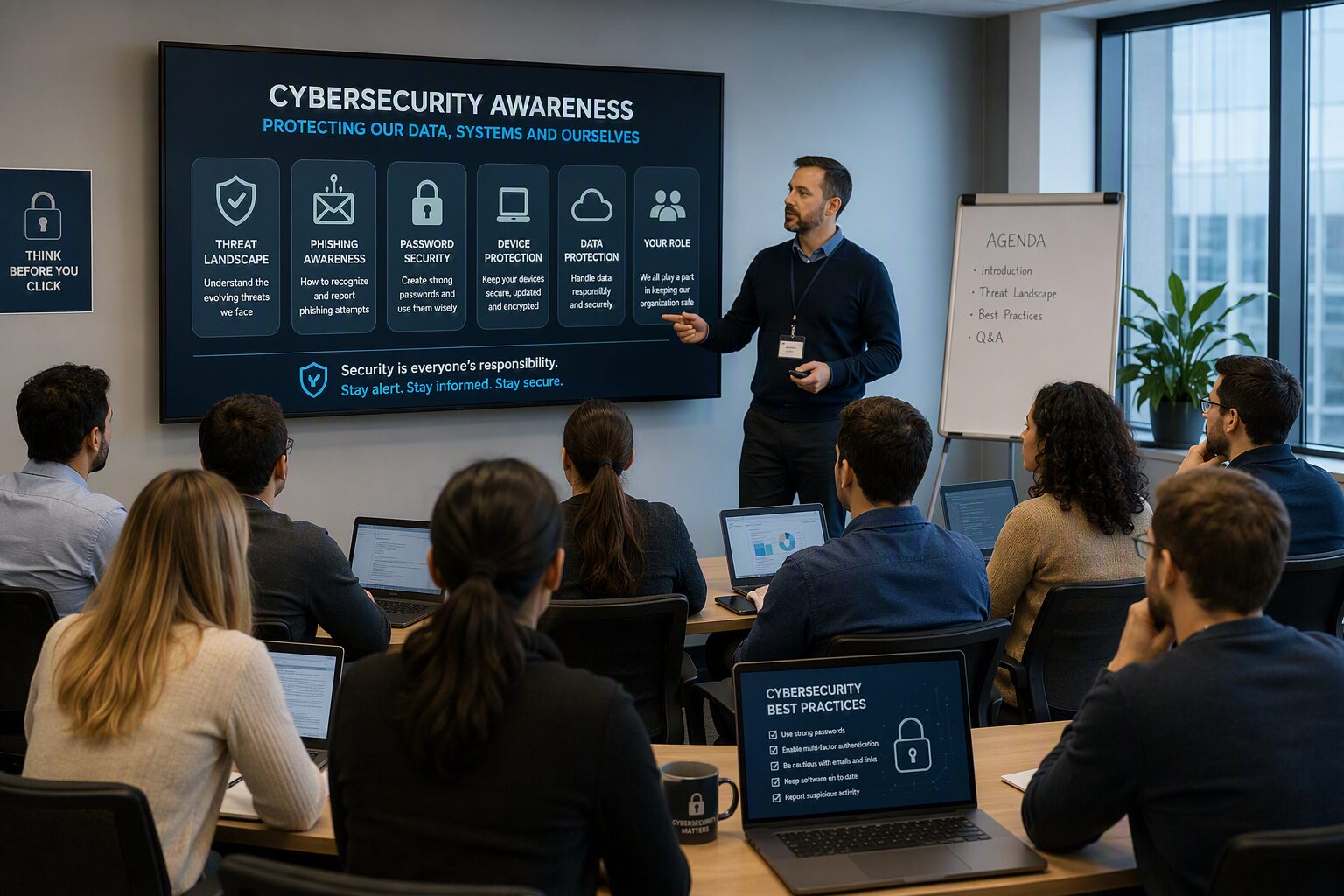
Even the most advanced technology is not sufficient if the people using it are unaware of the risks. The human factor remains one of the most vulnerable areas in cybersecurity, particularly in the face of phishing campaigns, social engineering attempts and targeted actions designed to steal corporate credentials.
For this reason, Targa Telematics has made continuous cybersecurity training a structural part of its security program. It is not treated as a single annual compliance course, but as an ongoing path involving both technical and non-technical employees.
For technical teams, training includes secure coding practices and frameworks such as the OWASP Top 10, with the aim of strengthening security throughout system development and management. All employees take part in awareness campaigns, phishing simulations and activities designed to improve their understanding of social engineering techniques.
Security also extends to the supply chain. Supply chain management is designed to ensure that suppliers are carefully assessed during the selection process and monitored over time, particularly when they provide critical services. This includes in-depth assessments and periodic audits aligned with demanding cybersecurity regulations such as NIS2.
For a company relying on a telematics platform, this is essential: service security depends not only on the primary provider, but also on the reliability of the wider technology ecosystem involved in delivering the service.
The value of certifications: a guarantee of ongoing commitment
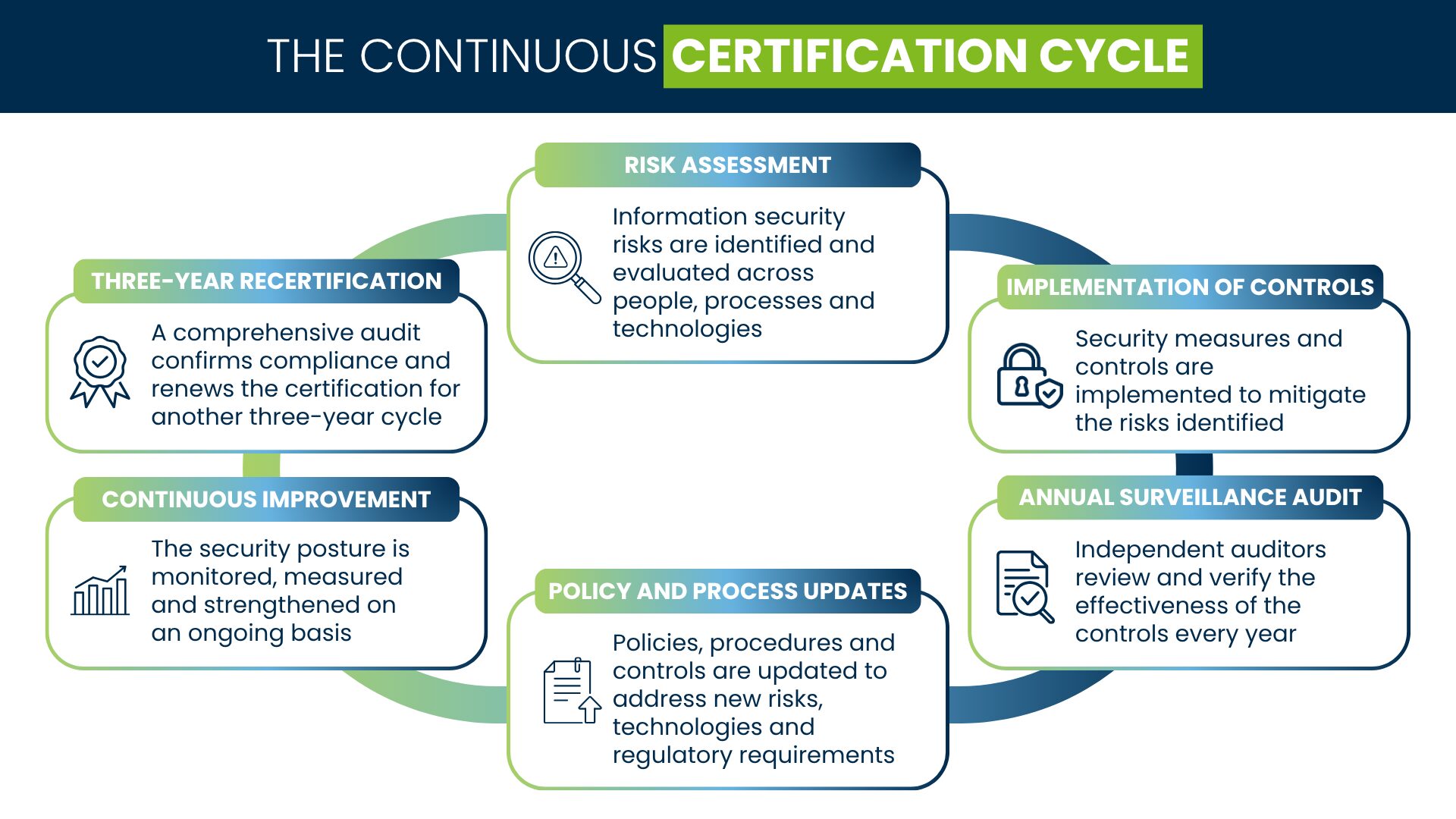
Certifications are a key element when assessing the reliability of a platform. They are not simply credentials to display, but commitments verified by independent third parties through rigorous audits and continuous processes.
One of the most important considerations is the continuous nature of security. Certification is not an end point: it requires periodic assessments, ongoing updates and continuous improvement. Annual surveillance audits and three-year recertification cycles verify that controls remain effective, policies are up to date and improvements are genuine. This ensures that processes continue to meet requirements as technology and regulations evolve.
For companies choosing a certified provider, this means relying on an organization subject to an accountability framework focused not only on past performance, but also on future compliance and improvement.
Certifications obtained by Targa Telematics
As evidence of this approach, Targa Telematics has obtained and maintains international certifications confirming the adoption of structured processes for information security management, cloud data protection and compliance with standards required by the automotive supply chain. For companies assessing automotive cybersecurity ISO standards, these certifications provide concrete and independently verified evidence.
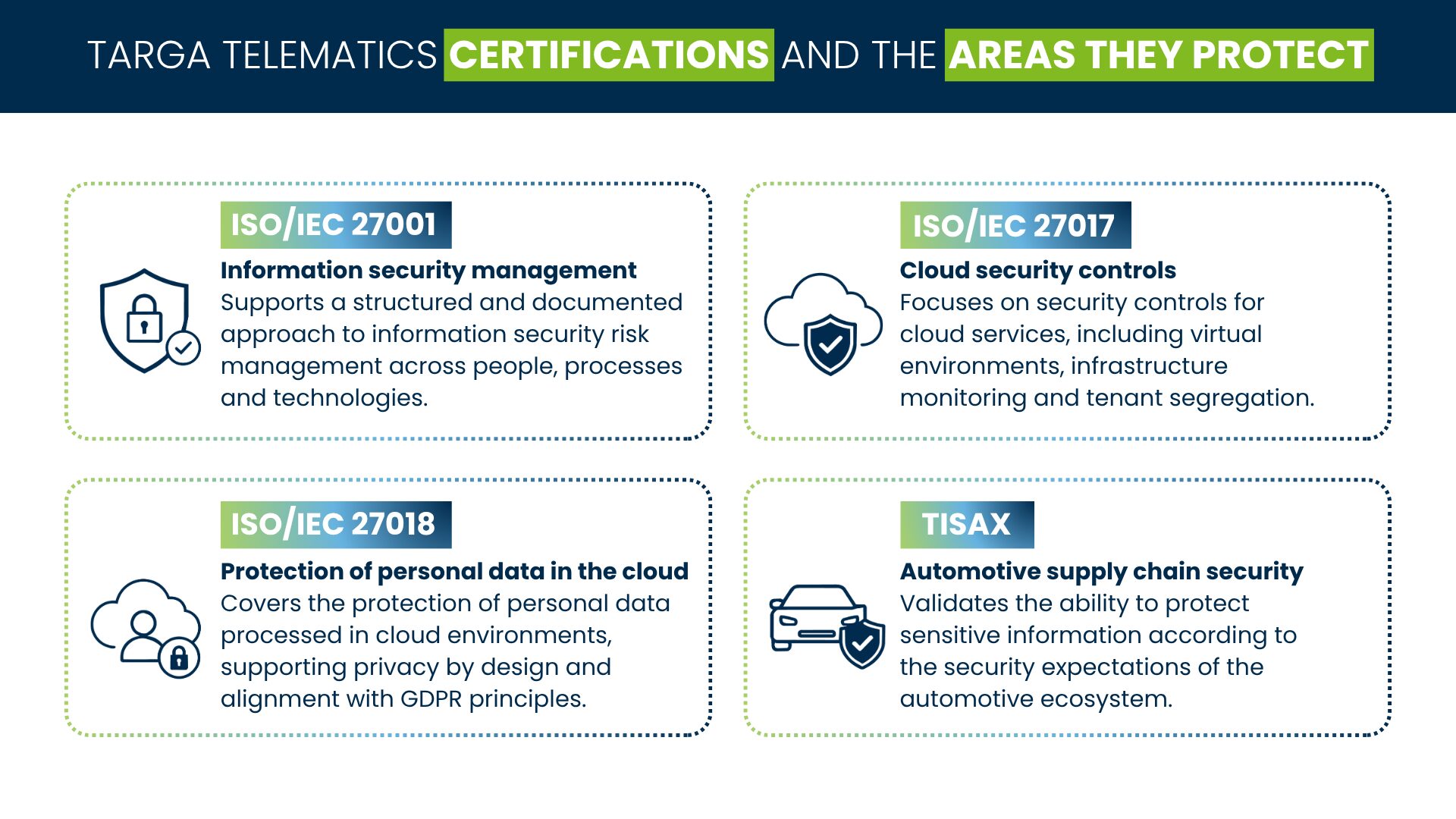
ISO/IEC 27001 is the international standard for Information Security Management Systems. It requires a systematic and documented approach to information risk management involving people, processes and technologies. Obtaining this certification means demonstrating that processes are based on a formal, documented and up-to-date risk assessment; appropriate controls are in place to mitigate identified risks; management is accountable for security; a structured security incident management process exists; and security is continuously improved rather than treated as a one-off project.
ISO/IEC 27017 extends ISO/IEC 27001 through additional controls specifically designed for cloud service delivery. It is particularly relevant to SaaS platforms such as Targa Telematics because it covers areas including the secure management of virtual environments, segregation between tenants, infrastructure monitoring and cloud-specific controls, meaning the protection of shared cloud resources, the isolation of different customers’ data and environments, and the continuous supervision of systems to detect and prevent potential threats. As most B2B services are now delivered through the cloud, this certification distinguishes providers that have established dedicated governance for cloud security from those that simply host applications on third-party infrastructure.
ISO/IEC 27018 focuses on protecting personal data processed in cloud environments, connecting cybersecurity management with GDPR compliance. It requires cloud service providers to process personal data only according to customer instructions, provide transparency about subcontractors and the countries where data is processed, respond promptly to data deletion or portability requests, and apply privacy by design.
These certifications are complemented by TISAX, the cybersecurity standard developed by the VDA association for the automotive supply chain. Within the automotive cybersecurity certification landscape, TISAX is specifically designed for the needs of OEMs, Tier 1 suppliers and digital service providers operating in the automotive sector.
Unlike ISO standards, which apply across multiple industries, TISAX assesses an organization’s ability to protect confidential information belonging to automotive partners according to criteria defined by the industry itself. For Targa Telematics, it provides formal recognition that its security management meets the expectations of some of the most demanding customers in the automotive industry.
Lorem ipsum dolor sit amet, consectetur adipiscing elit, sed do eiusmod tempor incididunt ut labore et dolore magna aliqua. Ut enim ad minim veniam, quis nostrud exercitation ullamco laboris nisi ut aliquip ex ea commodo consequat. Duis aute irure dolor in reprehenderit in voluptate velit esse cillum dolore eu fugiat nulla pariatur. Excepteur sint occaecat cupidatat non proident, sunt in culpa qui officia deserunt mollit anim id est laborum.
How to measure cybersecurity commitment in practical terms
The strength of a cybersecurity approach can also be measured through dedicated investment. Targa Telematics invests just under 10% of its revenue in cybersecurity every year. This commitment is part of a broader innovation strategy, an area in which the company invests 15% of its revenue.
These figures confirm that security is not treated as a formal requirement, but as a structural component of the platform and the services provided to customers.
Continuous testing also helps measure the resilience of the system. This includes periodic penetration testing conducted by third-party companies that simulate the actions of an attacker to identify potential vulnerabilities. These activities are essential for testing the platform, identifying areas of potential exposure and progressively strengthening protective measures.
This approach is particularly important for companies operating in sectors where service disruption can have an immediate operational impact. In these environments, businesses need a reliable platform capable of keeping data and functionality available even under complex conditions.
High standards that translate into customer value
Certifications, audits, investments, training and supply chain controls turn an abstract principle such as security into concrete and verifiable elements.
For companies selecting a telematics platform, this means assessing a provider not only on the functionality it offers, but also on its ability to manage risk in a structured way, keep processes up to date and demonstrate the quality of its controls over time. As telematics platforms support increasingly important operational activities, meeting high cybersecurity standards contributes to data protection, service continuity and the reliability of the entire mobility ecosystem.
The quality of the Targa Telematics solution is therefore based on an approach that does not treat security as an isolated or occasional activity. It is an ongoing commitment supported by independent verification, investment, expertise and structured processes.
